CHEGA – Enough Is Enough: Fragmented Identity Through Art
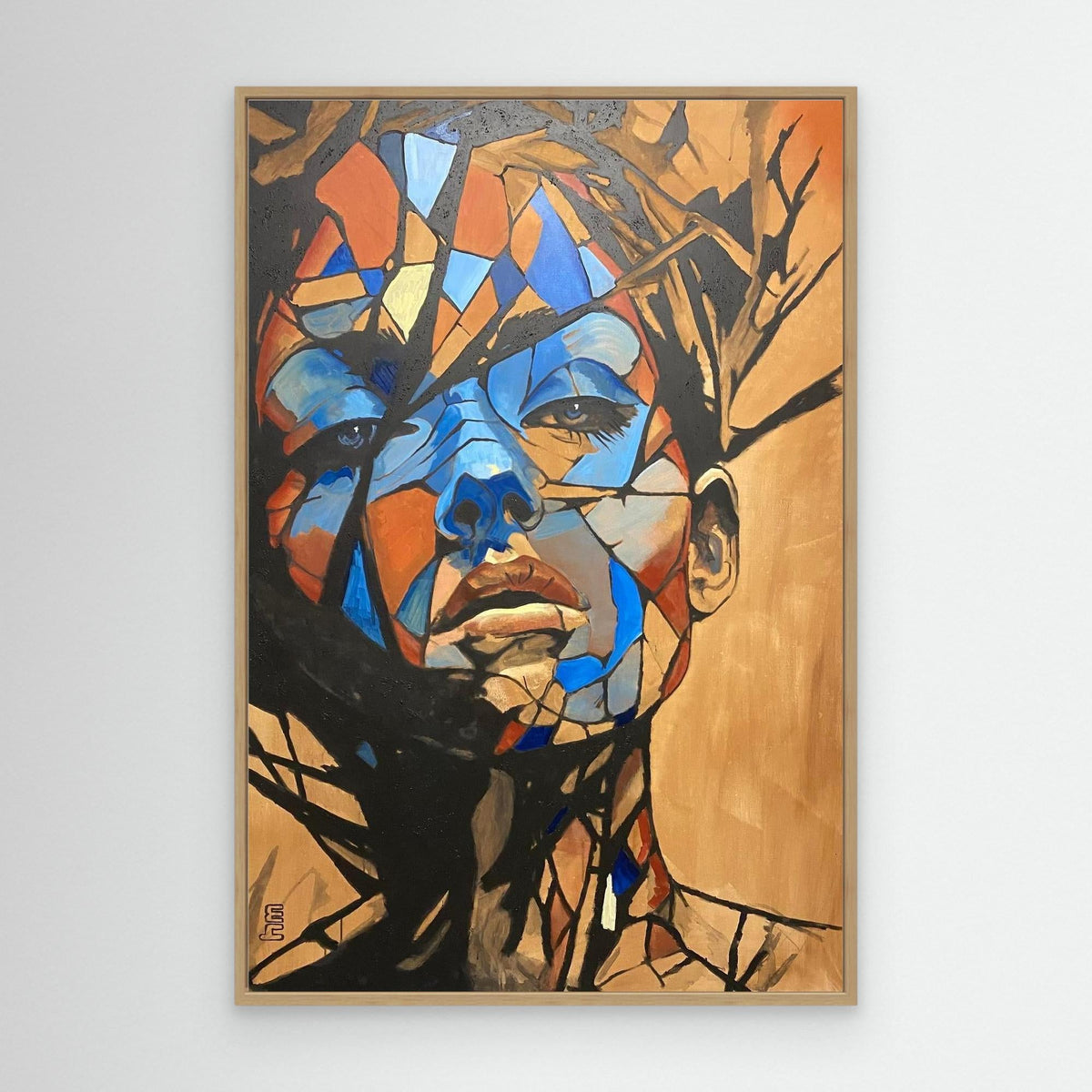
Art has a unique way of reflecting the human condition. In CHEGA – Enough Is Enough-2, Hervé Missiaen captures the essence of resilience, identity, and transformation through a vibrant mosaic of colors. This piece transcends traditional portraiture and delves into the layered complexities of life, human emotion, and community.
A mosaic of colors forms a face, capturing the fragmented nature of identity through vibrant abstraction. The shards represent struggles, pain, and challenges, yet collectively create something resilient and beautiful. This work isn’t just a portrait—it’s a statement about enduring, rebuilding, and rising above.
The Story Behind CHEGA – Enough Is Enough
When you look at this portrait, you see more than a face. You see fragments, shards, pieces that once threatened to fall apart. They are traces of a community that, under harsh circumstances, almost completely shattered everything personal. Yet, this is not an image of downfall. Each broken part contributes to a new whole, stronger and more intense than before. The cracks reveal vulnerability, but also the immense strength to endure despite adversity.
CHEGA – “enough is enough” – marks a tipping point. It represents the moment when an individual no longer yields to external pressure but instead draws a line. The bold lines and contrasting colors reinforce a sense of resistance, reconstruction, and self-realization.
A Mirror of Society and Personal Transformation
Art is often a reflection of society and the human experience. Explore Hervé Missiaen’s full collection to see how themes of identity, resilience, and transformation recur in his work. CHEGA is no exception. It is both intensely personal and universally relatable. The piece prompts reflection on personal limits, boundaries, and what must be left behind to reconstruct a stronger self.
The artwork invites viewers to confront questions such as:
-
How much can we endure before breaking?
-
How do fragmented experiences shape our identity?
-
What beauty emerges from reconstructed life?
These reflections encourage emotional engagement, making CHEGA not just a visual experience but also an intellectual and spiritual one.
The Artistic Techniques Behind CHEGA
CHEGA utilizes abstraction, vibrant mosaics, and contrasting color schemes to convey emotion. The fragmented pieces are symbolic of life’s trials, each segment telling a story. Missiaen’s use of bright lines highlights the boundaries between vulnerability and strength, showing that resistance does not negate beauty but enhances it.
The visual language of this artwork bridges realism and symbolism. On the surface, one sees a colorful portrait. Beneath, it speaks to resilience, self-awareness, and transformation, blending personal narrative with universal themes.
Why CHEGA Speaks to Everyone
In times of global upheaval and social fragmentation, CHEGA resonates deeply. It reminds us that personal and collective crises can lead to reconstruction, renewal, and strength. The mosaic face acts as a mirror for viewers, urging introspection and self-discovery. Its message is clear: no matter the external pressures, there comes a moment to declare, “enough is enough.”
The universality of this message ensures that CHEGA appeals to both art collectors and casual viewers seeking meaning. It’s not merely an art piece; it’s a dialogue between the artist and the audience.
Buy CHEGA – A Transformational Artwork
Ready to own a piece of profound artistic expression? Purchase HM-ART1545 – CHEGA, Enough Is Enough-2 and invite resilience and inspiration into your personal space. This artwork is perfect for collectors, galleries, or anyone looking to enrich their environment with transformative art.
For a broader perspective on Hervé Missiaen’s works and artistic philosophy, visit Hervé Missiaen Art Home.
The Psychological Impact of Fragmented Art
Studies show that abstract art engages the brain differently than figurative art. CHEGA’s fragmented design stimulates emotional and cognitive responses, helping viewers process personal experiences and emotions. The act of observing a mosaic face allows for reflection on brokenness and the potential for reintegration—echoing themes of recovery, resilience, and identity formation.
Art therapy practitioners often recommend abstract art for emotional exploration, making CHEGA an impactful choice for both personal and professional settings.
Conclusion: CHEGA as a Symbol of Resistance and Reconstruction
CHEGA – Enough Is Enough-2 is more than an art piece; it is a philosophical statement. Its vibrant fragments tell a story of endurance, self-discovery, and transformation. By engaging with this artwork, viewers confront their own experiences and are reminded of the power of resilience.
Explore the full journey of Hervé Missiaen and view his art collection to immerse yourself in other masterpieces that echo similar themes. CHEGA serves as a beacon of strength, a call to action, and a visual narrative of hope and reconstruction.

Leave a comment
This site is protected by hCaptcha and the hCaptcha Privacy Policy and Terms of Service apply.